
The best survey question goes out after the RSVP
The question worth asking is who they want to meet, and AI is what finally makes the answers usable.
Key Takeaways
- You can add survey questions after you have initial RSVPs
- Questions like, "what's taking up your headspace right now" and "what conversation would make the night worth it"
- AI gives you the bandwidth to matchmake based on these answers at smaller events too, not just at a three-day offsite
Your registration form knows who’s vegetarian.
It doesn’t know that your CFO guest is six months into a fundraise that’s going badly.
Here’s the tip: the highest-leverage question you’ll send a guest isn’t on the first registration form.
The two questions worth adding
Neither of these sound like a survey question:
- What’s taking up most of your headspace right now?
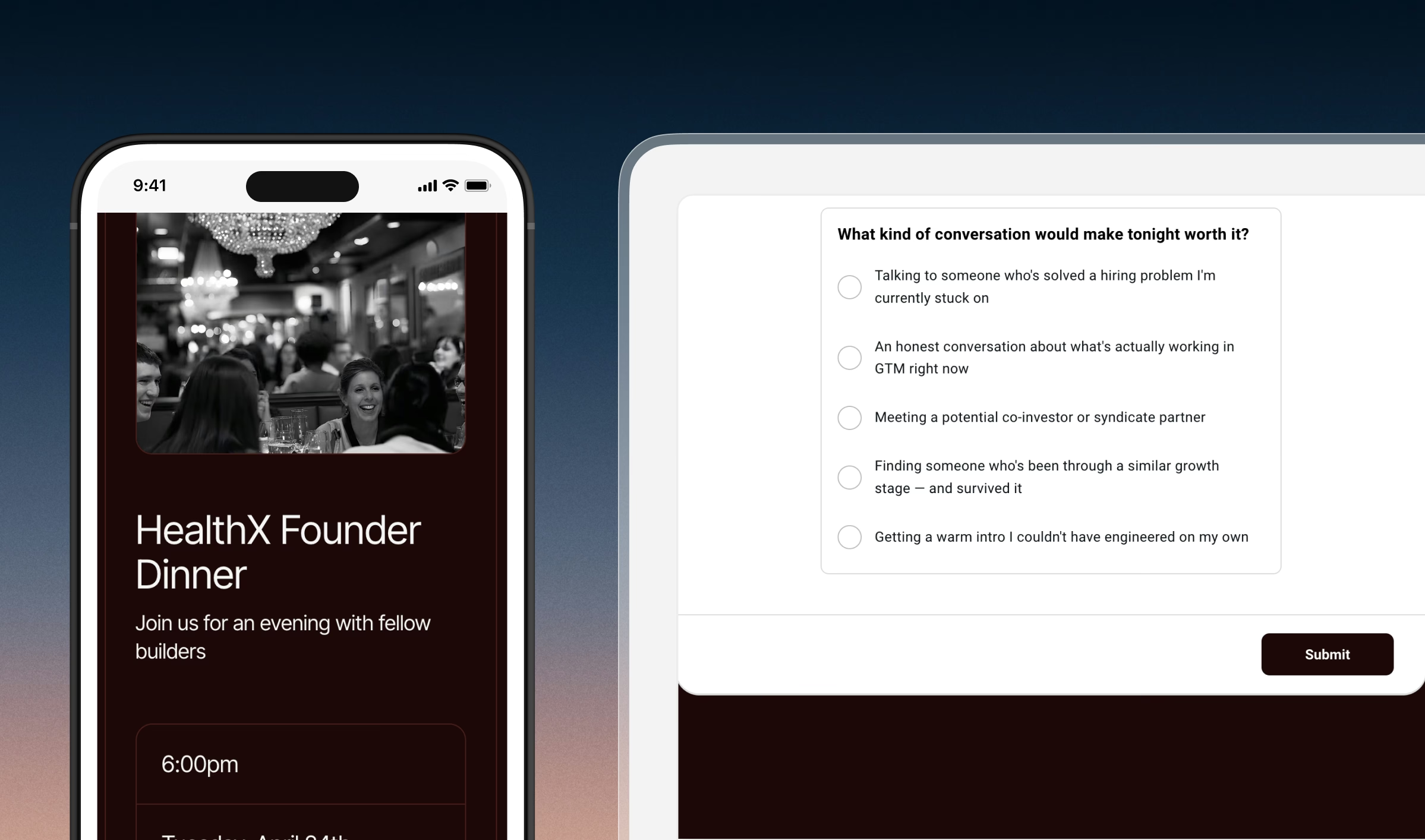
- What kind of conversation would make the night worth it for you?
The registration form asks the guest to formalize their attendance. These ask them to tell you, in their own words, what they’re hoping for.
The answers are almost always more specific than anything you can pull from your CRM.
You can add survey questions to an event at any point, including after RSVPs are in.
Most teams don’t (because there was nothing to do with the answers).
That’s changed.
The math used to only work at scale
For a three-day summit, of course you read survey responses carefully. The whole point of bringing 80 people for three days is the conversations between sessions.
But for a Tuesday founder happy hour with 24 yeses? No one was doing that…
Now, you can ask, in plain English: based on these survey responses and the guest list, who should meet whom at this dinner?
This technique is for the room that sits between fifteen and forty guests. Slightly too big to hold in your head, slightly too small to justify a real matchmaking team.
What the pairing looks like
On a 24-person founder meetup, an AI model surfaced a pair we wouldn’t have flagged manually.
Hannah, an early-stage founder, said she was struggling with hiring and wanted to talk to someone “who’s been through it.” Julia, a Series B founder on the same guest list, said hiring was the thing on her mind. Same problem, different sides.
They wouldn’t have found each other in a room of 24.
The room would have sorted itself by familiarity.
Relationship data isn’t deal data
Answers to “what’s on your headspace” are personal.
Store them on the guest profile, not in your main CRM.
Your deal team doesn’t need to see what a founder said about hiring trouble at 11pm on a Sunday. The hospitality layer between your team and your guests does.
That distinction gets sharper the more of this you do.
Where it breaks down
- Past 30 to 40 guests, the AI models get confused. It tries to “build an AI-powered artifact” instead of giving you the list. Chunk by table or by track and ask the same question on each chunk.
- The first pass is always wrong about something. The model doesn’t know that two founders went to the same college or that the partner hosting has a rule about never seating two competitors at the same table. Treat the output as a draft.
- Not every event needs this. The four-person partner dinner doesn’t. The recurring quarterly where the same fifteen people show up doesn’t either.
A move to try this week
For your next event with more than fifteen RSVPs and at least three days of runway, add the two questions to your survey and then tell your guests about it in your reminder campaign you were already going to send.
When the answers come back, paste them into Claude or ChatGPT with a one-line prompt: based on these responses, who should meet whom at a 20-person dinner, and why?
Send the one-pager to whoever’s hosting on the morning of the event.
Frequently Asked Questions
What's the best survey question to ask guests before an event?
The two highest-leverage questions go in the reminder email a few days before the event, not on the registration form. "What's taking up most of your headspace right now?" and "What kind of conversation would make the night worth it for you?" They're worded as conversation, not as a survey, which is why guests answer them honestly.
Can AI help with seating or matchmaking for a small dinner?
Yes, for rooms between roughly fifteen and forty guests. Paste your survey responses and guest list into Claude or ChatGPT with a prompt like "based on these responses, who should meet whom at a 20-person dinner, and why?" Past 30 to 40 guests the model gets confused and you're better off chunking by table. Treat the first pass as a draft.
The Shortlist Monthly
For teams whose guest list is a shortlist
Once a month we send the best of what we published, one email, from the team at Gatsby.